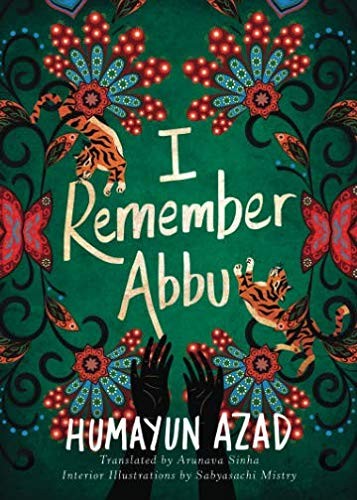

Stephanie Jane recenzis I Remember Abbu de Humayun Azad
This story should be a modern classic of war fiction
5 steloj
At first I wasn't sure how well I would get on with a novel, well, a novella really, which is predominantly narrated by such a young protagonist. As it turned out, I felt that the concept worked brilliantly well with the child's obvious naivete about what was really happening in the world around them being such a powerful contrast to the encroaching war. Through their eyes, Dhaka is a magical place of brightly coloured flowers, butterflies and fairies, but for older readers such as myself, the excitement of many hundreds of people marching with their brand new nation's flag is tinged with the expectation of imminent violence.
Set in 1971, I Remember Abbu is a poignant rendition of Bangladesh's fight for independence from Pakistan. A conflict born of Britain's failure to understand what we were unleashing with our ill-thought-out Partition of India, Azad shows how the war was long in …
At first I wasn't sure how well I would get on with a novel, well, a novella really, which is predominantly narrated by such a young protagonist. As it turned out, I felt that the concept worked brilliantly well with the child's obvious naivete about what was really happening in the world around them being such a powerful contrast to the encroaching war. Through their eyes, Dhaka is a magical place of brightly coloured flowers, butterflies and fairies, but for older readers such as myself, the excitement of many hundreds of people marching with their brand new nation's flag is tinged with the expectation of imminent violence.
Set in 1971, I Remember Abbu is a poignant rendition of Bangladesh's fight for independence from Pakistan. A conflict born of Britain's failure to understand what we were unleashing with our ill-thought-out Partition of India, Azad shows how the war was long in the making with a sense of inevitability about what occurred, but this is also an intensely personal story which, I feel, is what I loved so much about the book. One family's experiences reflect those of their nation and reflects those of all families caught up in civil wars. On one hand there was a depressing familiarity about several scenes in I Remember Abbu as a foreign army occupies the city and desperate refugees must walk for days in search of safety. On the other hand, I Remember Abbu also has such an atmosphere of love in the way the child, grown to a young woman, attempts to recall every glimpse of her adored father. He has gone, but she lives on and in that, there is hope.
I am surprised that I Remember Abbu is not more widely known outside of Bangladesh. It was originally written, beautifully written, over thirty years ago and, to my mind, this story should be a modern classic of war fiction. Emotionally it is not an easy read, but I am delighted to have discovered Azad's work here and hope that more of his books have also been translated so I might read them.